Circular economy principles have long guided how we think about materials, waste, and resource efficiency. At Circularity First, we apply that same thinking directly to technology decision making, because the most impactful choices happen at the beginning of a decision, not the end.
Most organisations think about sustainability after the decision is already made. After the architecture is set, after procurement has started, and after new equipment is on order. By that point, the opportunity to make a genuinely sustainable choice has already gone.
We work with organisations to embed circular economy principles into every stage of technology planning, evaluating how existing assets can be optimised, extended, repurposed, or reintroduced before defaulting to new manufacture. The result is infrastructure that costs less to run, carries less carbon, and holds its value for longer.



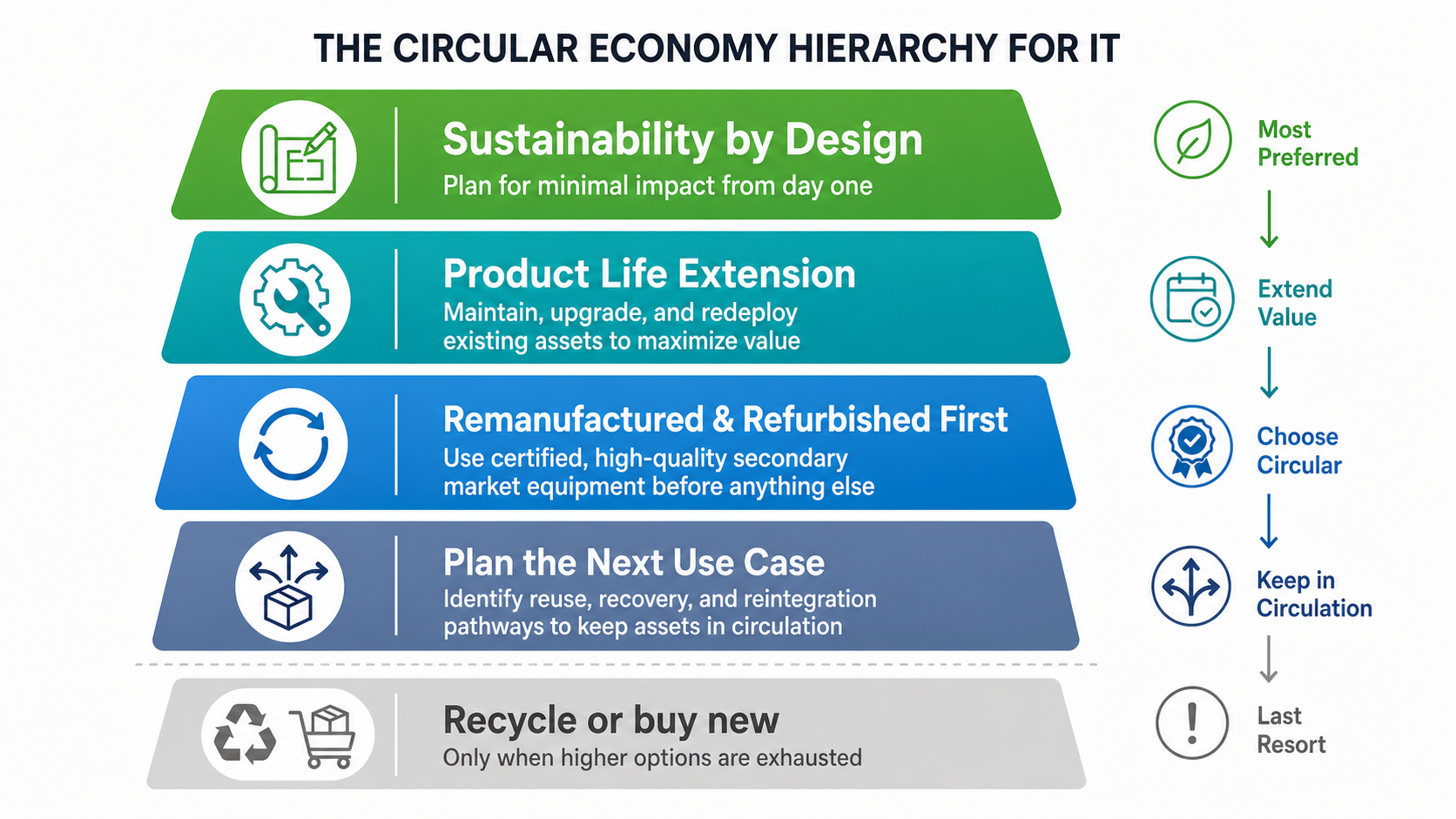
Circular economy principles are not about accepting less. They are about making smarter, more commercially sound decisions that unlock value at every stage of the technology lifecycle. Organisations that apply this thinking consistently become more efficient, more resilient, and better positioned for what is coming.
To understand how these principles are being applied across the industry, the Ellen MacArthur Foundation provides a useful reference point for circular economy thinking at scale.